
Bodyfulness Over Mindfulness: 3 Indispensable Leadership Strategies
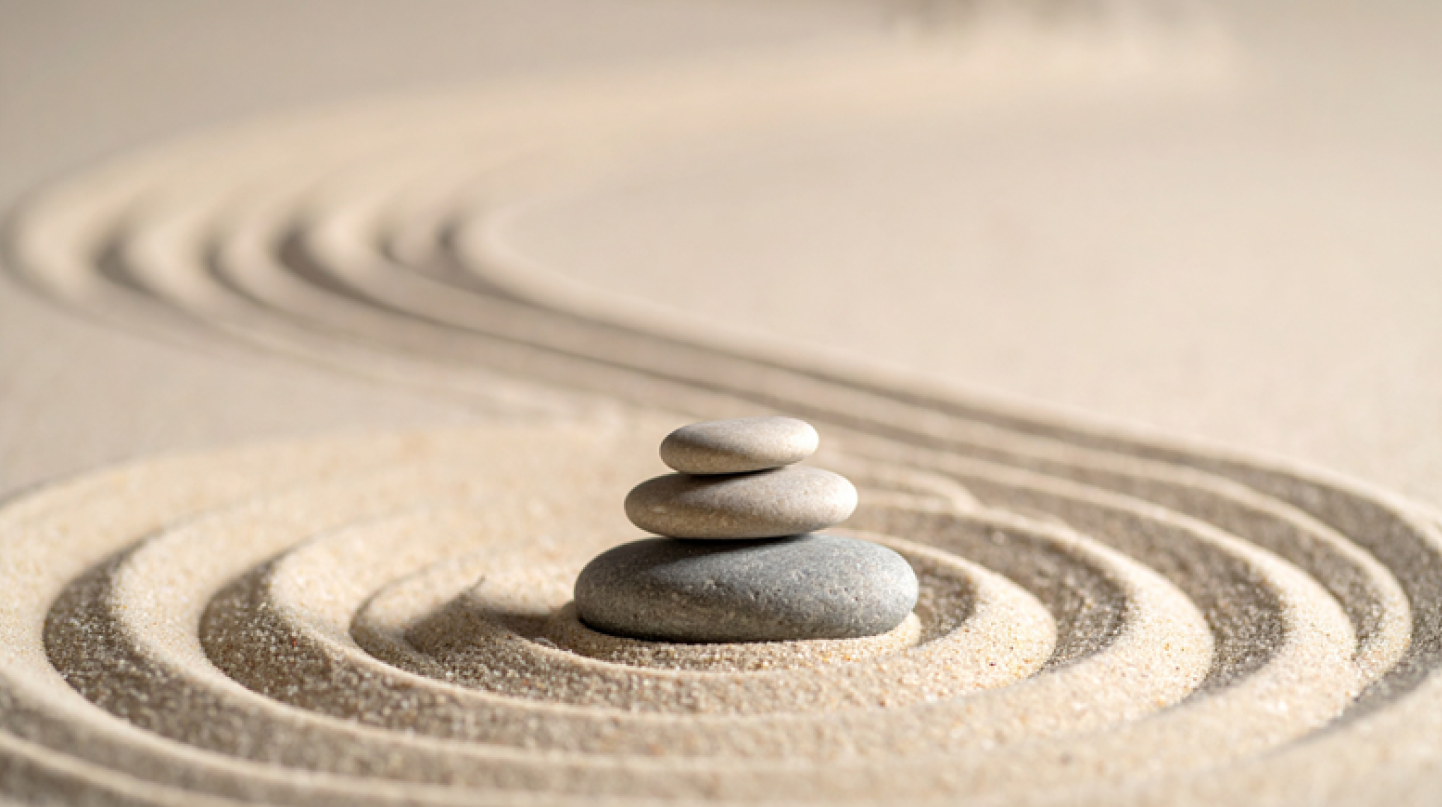
Only as mindfulness centers on the body do we get to live and lead out of the fullness of who we are. The strategies for doing so are not concepts, but movements. Credit: TrueCreatives
By Ginny Whitelaw
Originally published on Forbes.com on August 1, 2026.
“There is one thing that, when cultivated and regularly practiced, lead
to deep spiritual intention,
to peace,
to mindfulness and clear comprehension,
to vision and knowledge,
to a happy life here and now,
and to the culmination of wisdom and awakening.
And what is that one thing?
It is mindfulness centered on the body.” -Gautama Buddha
For years, it seemed as though we left out the last four words—“centered on the body”—in how mindfulness spread from the Miracle (of Mindfulness) that Thich Nhat Hanh introduced fifty years ago to the Mindfulness-Based Stress Reduction that Jon Kabat-Zinn skillfully spread to millions. It is no fault of these great teachers (both of whom emphasized the body as well), but merely a cultural habit to live in our heads. After all, that’s where the brain is, that’s where we think from, that’s where we think the ego-I lives. So, if we want all those benefits of the good life—peace, happiness, wisdom, and so on—we just put our mind to it, right?
No. The intent of our mind is a key part of the good life and good leadership, to be sure, but without reintegration with the body, we get easily confused and destabilized. Indeed, it’s the seeming separation of mind from body that reinforces our sense of a separate self—separate from the earth we live on, separate from others and separate from all we interdepend on. While she’d be the first to say she didn’t invent the term, Christine Callwell’s book, Bodyfulness, is a healthy antidote to living in our heads, as it is rich in principles and applications for how we work as physical bodies. Mindfulness, if it’s limited to watching our thoughts and emotions, is an important but partial practice. Bodyfulness builds on mindful attention and adds back those crucial words—“centered on the body”—helping us become more nuanced and skillful, for example, in managing our energy, regulating our nervous system, and building strong and supportive relationships. Here are three indispensable Zen Leadership strategies that apply the principles of Bodyfulness to leading with greater resilience, joy and impact.
Rhythm, Not Relentless
First in Caldwell’s list of eight body principles is oscillation. Everything in the body runs in vibratory cycles from heartbeats to brainwaves to sleep-wake cycles. To oscillate or vibrate with something else is what we mean by resonance, which is the principle underlying all change, including change in us. When oscillatory waves add up or synchronize, we call it coherence. And we know from research at the HeartMath Institute that what we measure objectively as coherence is felt subjectively as a sense of harmony and wellbeing.
So, it should come as no surprise that the optimal way to regulate our life, manage our workday or lead with our teams has an oscillatory rhythm to it. It is not a relentless, mind-over-matter, day-after-day cramming of endless activity. Nor is it an ill-timed checking out, giving up or collapsing. Rather, we work with far greater resilience by working coherently with the rhythms within and around us. The more bodyful we are, that is, the more relaxed and attentive we are to sensations in the body, the more we sense those rhythms—like catching the beat of a distant song that we must listen intently for. We’ll sense, for example, that there’s a rhythm to the day, and that when we walk, talk or work in that rhythm, we’ll feel a sense of larger support. We’ll sense there’s a rhythm to when we’re at our best and should tackle our most challenging work, and when we need to refresh or rest. We’ll sense there’s a rhythm to how our teams work best, and that if we go too fast, we’ll lose them and if we go too slow, they’ll get bored or distracted. We’ll even learn there’s a rhythm for building capacity, as in the disciplined routines of great athletes or what I’ve experienced during intensive Zen practice where people train 18-20 hours a day for a week and come out stronger than they went in.
For sure, there are life pressures that work against finding our resilient rhythms—demands of the workday, expectations at home. And yet, ownership and discipline still make it possible. The leader who takes bodyful ownership of their life and enacts disciplined practices to sense its rhythms will not only enjoy greater harmony and wellbeing but bring greater coherence to their work and to their world.
Down, Not up
If you tighten your fists and tense your body into an uptight posture—try it for a few seconds—you’ll instantly feel how energy rises toward your head. This is no accident. It takes more than 20% of our metabolic energy to run our brain and, when the body signals tension, we throw even more energy up there to figure out what’s our next move. Chronic stress and tension put us more up in our heads, more consumed by the worries of our seemingly separate selves. The antidote to this dysfunctional state is the 2nd indispensable leadership strategy: send energy Down, Not Up.
Sending energy down accords another of Caldwell’s principles of the body and that is balance. In a literal, physical sense, the body must balance itself in the field of gravity. It doesn’t take much physics to know that the lower the center of gravity in a body, the more stable it is. That’s why cups made for toddlers, for example, are rounded and weighted on the bottom, so if a tiny fist knocks them over, they roll right back. The equivalent in a human body is to be centered in the lower abdomen, known as hara, with our legs under us and our feet on the earth. This is the condition cultivated in Japanese martial arts such as Aikido, Judo or Sumo wrestling, where it’s clear that a lower center of gravity and relaxed upper body are more effective. But this condition is not only useful in such arts, it is exactly what enables leaders to be more stable under pressure and more impactful in their actions. Putting it another way, living up in our heads is as far away from the earth as we can get, and is the most vulnerable, unstable condition we can create for ourselves.
Short of training in Japanese arts, an everyday practice that brings the stability and power of Down, Not up into leadership is hara breathing. If, for a moment, you just let out a sigh a relief —ah-h-h-h—you’ll feel a downward dropping in the body, making you already more stable. Hara breathing supercharges that process by making every exhale a long, slow descent down through the hara, through our feet, into the earth. It takes practice, as there’s a subtlety to setting the hara that helps this process along, yet nothing lends itself better to developing intrinsic leadership power, presence and resilience.
Out, Not In
The third indispensable strategy is supported by the first two and is where true leadership begins, for it is where we extend our energy from inside-out toward what we intend, as opposed to reacting and coping with forces from outside in. Leadership from the Inside Out, as Kevin Cashman coined it nearly 30 years ago, orients our energy toward what we want and what adds value to life, not toward a self stuck with problems. It works with the bodyfulness principle of energy conservation by using our energy coherently, rather than dissipating it in useless resistance or fighting with ourselves. It also honors the principle that we learn through challenge. Indeed, flow state research shows that our optimal performance only comes about under challenging conditions.
That said, it takes energy to extend energy, which is fostered by honoring natural rhythms and using breath to center ourselves down. From hara centeredness, we can then extend our energy in service of our immediate and long-term purposes. This includes the energy of attention, by which we expand our sensory antennas with heartfelt empathy or greater curiosity and the energy of action by which we express our gifts. Extending energy through attention and expression we relate with others, literally synchronizing our energies with the people and situations around us. Our coherent state creates coherence with others, and the aggregation of coherent “islands” is the physical principle by which individual efforts become collective, higher order emerges from chaos and new value is created.
Far from just putting our minds to it or “mind over matter,” it is bodyfulness over mindfulness alone that reintegrates our energy and matter. Bodyfulness informs indispensable leadership movements for cultivating a felt sense of oneness, a peaceful, regulated nervous system, sensory aliveness, wise discernment, clarity in action, and the joy of expressing our gifts in a full-on dance with purpose, with others, with life. In other words, put back those last four words where mindfulness is centered on the body and we get the whole shopping list of a good life, which is not only the Buddha’s promise, but the promise of the Buddha nature in each of us.
Ginny Whitelaw is the Founder and CEO of the Institute for Zen Leadership.